what happen to unsold vegetables from farmers market in california
Americans throw away almost every bit much nutrient as they eat because of a "cult of perfection", deepening hunger and poverty, and inflicting a heavy toll on the environment.
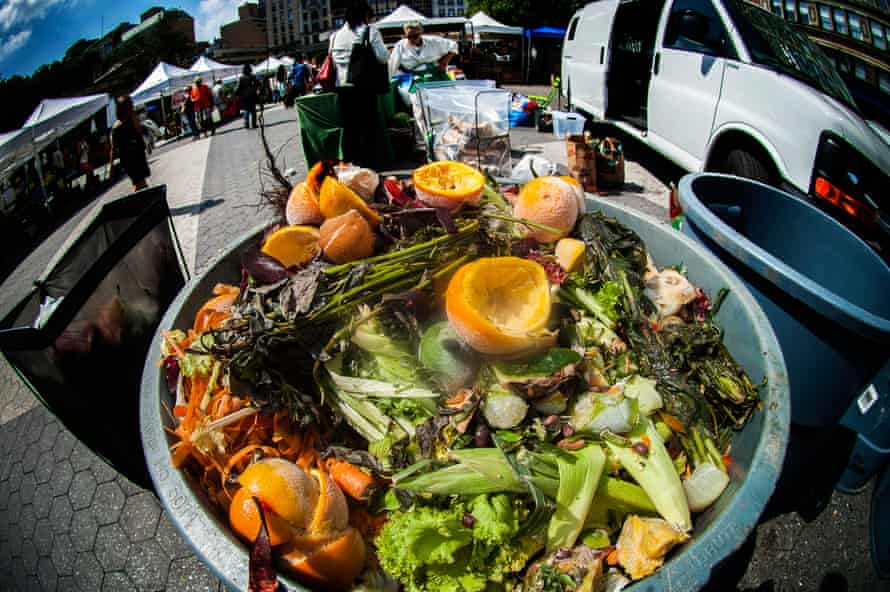
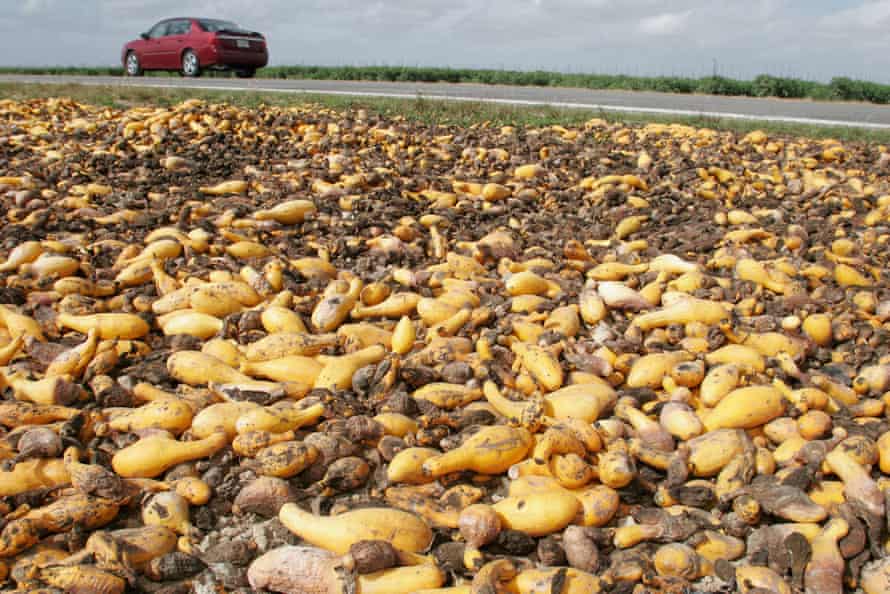
Vast quantities of fresh produce grown in the US are left in the field to rot, fed to livestock or hauled directly from the field to landfill, because of unrealistic and unyielding cosmetic standards, according to official information and interviews with dozens of farmers, packers, truckers, researchers, campaigners and authorities officials.
From the fields and orchards of California to the population centres of the e coast, farmers and others on the nutrient distribution concatenation say high-value and nutritious food is being sacrificed to retailers' demand for unattainable perfection.
"Information technology'southward all about blotch-free produce," says Jay Johnson, who ships fresh fruit and vegetables from Due north Carolina and primal Florida. "What happens in our business concern today is that it is either perfect, or information technology gets rejected. It is perfect to them, or they turn information technology down. And and so you are stuck."
Food waste is oft described equally a "farm-to-fork" trouble. Produce is lost in fields, warehouses, packaging, distribution, supermarkets, restaurants and fridges.
Past 1 authorities tally, about 60m tonnes of produce worth nigh $160bn (£119bn), is wasted by retailers and consumers every year - i tertiary of all foodstuffs.
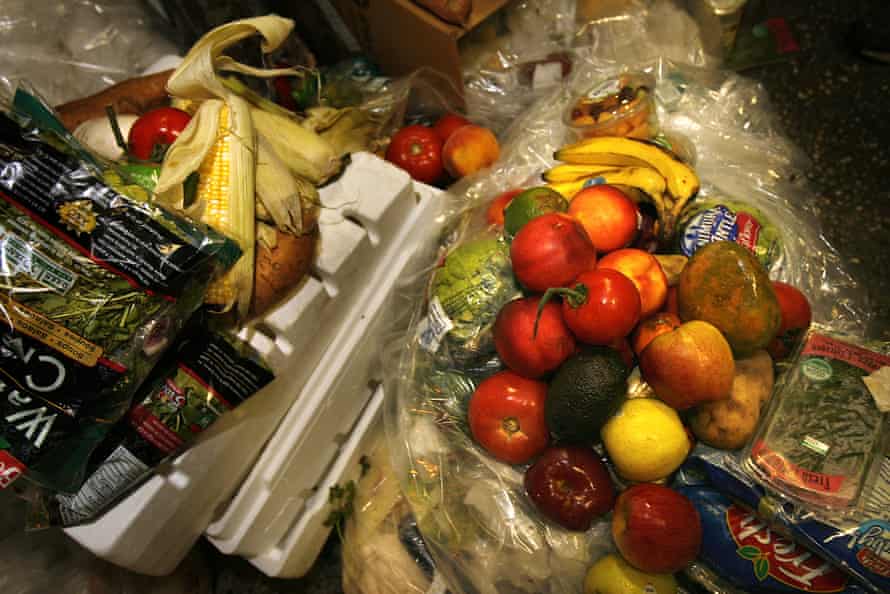
But that is just a "downstream" measure. In more than 2 dozen interviews, farmers, packers, wholesalers, truckers, food academics and campaigners described the waste that occurs "upstream": scarred vegetables regularly abased in the field to save the expense and labour involved in harvest. Or left to rot in a warehouse because of minor blemishes that do not necessarily affect freshness or quality.
When added to the retail waste material, information technology takes the amount of food lost shut to half of all produce grown, experts say.
"I would say at times there is 25% of the crop that is just thrown away or fed to cattle," said Wayde Kirschenman, whose family has been growing potatoes and other vegetables nigh Bakersfield, California, since the 1930s. "Sometimes it can be worse."
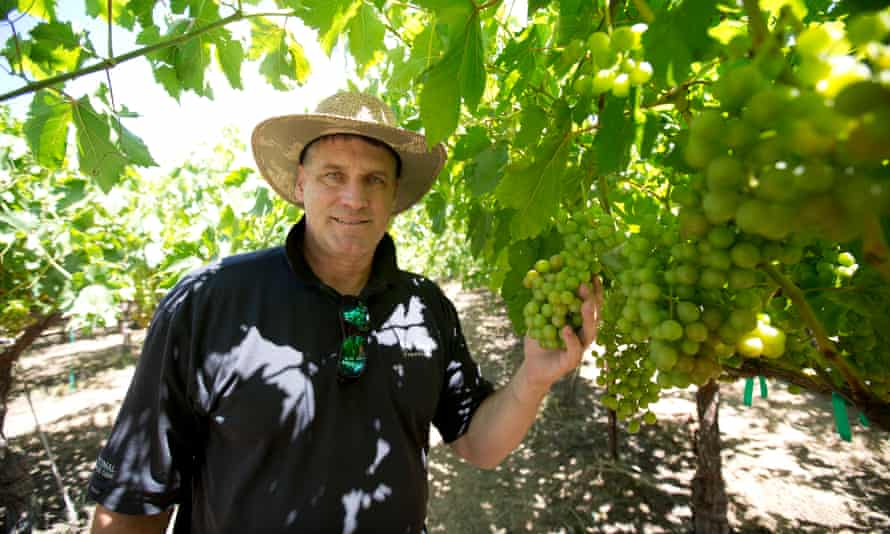
"Sunburnt" or darker-hued cauliflower was ploughed over in the field. Table grapes that did not adapt to a wedge shape were dumped. Unabridged crates of pre-cut orange wedges were directed to landfill. In June, Kirschenman wound up feeding a significant share of his watermelon crop to cows.
Researchers admit there is equally yet no articulate accounting of nutrient loss in the U.s.a., although thinktanks such equally the World Resources Institute are working towards a more than accurate reckoning.
Imperfect Produce, a subscription delivery service for "ugly" food in the San Francisco Bay surface area, estimates that about one-fifth of all fruit and vegetables are consigned to the dump because they practice not conform to the industry standard of perfection.
Merely farmers, including Kirschenman, put the rejection rate far higher, depending on cosmetic slights to the produce because of growing conditions and weather.
That lost food is seen increasingly as a drag on household incomes – nigh $1,600 a twelvemonth for a family of four – and a straight challenge to global efforts to fight hunger, poverty and climate change.
Globally, about ane-third of nutrient is wasted: 1.6bn tonnes of produce a year, with a value of about $1tn. If this wasted food were stacked in 20-cubic metre skips, it would fill up 80m of them, enough to accomplish all the way to the moon, and encircle it one time. Taking activeness to tackle this is not impossible, as countries similar Denmark accept shown.
The Obama administration and the Un take pledged to halve avoidable nutrient waste matter by 2030. Nutrient producers, retail bondage and campaign groups such equally the Natural Resources Defense Council have also vowed to reduce food loss in the ReFED initiative.
Nutrient experts say at that place is growing sensation that governments cannot finer fight hunger, or climate change, without reducing food waste matter. Food waste accounts for about 8% of global climate pollution, more than India or Russian federation.
"There are a lot of people who are hungry and malnourished, including in the Usa. My guess is probably 5-10% of the population are however hungry – they still do non have enough to eat," said Shenggen Fan, the managing director general of the International Food Policy Research Plant in Washington. "That is why food waste material, food loss matters a great deal. People are still hungry."
That is non counting the waste material of water, land and other resource, or the toll on the climate of producing nutrient that ends upwardly in landfill.
Within the United states of america, discarded nutrient is the biggest unmarried component of landfill and incinerators, according to the Ecology Protection Agency. Food dumps are a rising source of methane, a far more powerful greenhouse gas than carbon dioxide. But experts readily admit that they are only beginning to come to grips with the calibration of the problem.
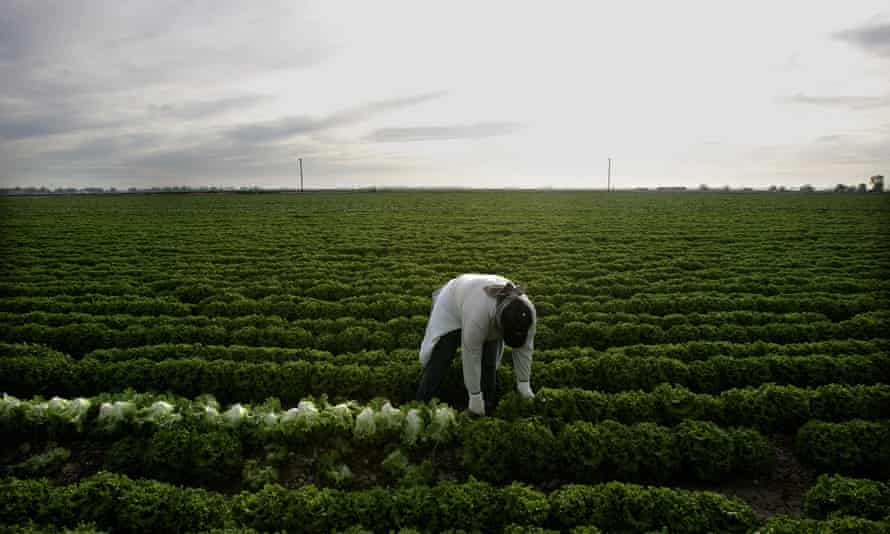
The May harvest season in Florida plant Johnson with 11,000kg (24,250lbs) of freshly harvested spaghetti squash in his absurd box – perfect except for brown scoring on the rind from loftier winds during a spring storm.
"I've been offer information technology for six cents a pound for a week and nobody has pulled the trigger," he said. And he was "expecting an additional 250,000lbs of squash," similarly marked, in his warehouse a fortnight later.
"There is a lot of hunger and starvation in the The states, so how come I haven't been able to find a home for this vi-cents-a-pound food yet?" Johnson asked.
Such frustrations occur regularly forth the entirety of the U.s. food production concatenation – and producers and distributors maintain that the standards are always shifting. Bountiful harvests bring more than exacting standards of perfection. Times of shortage may prove more forgiving.
Retail giants argue that they are operating in consumers' best interests, according to food experts. "A lot of the waste material is happening further up the nutrient concatenation and often on behalf of consumers, based on the perception of what those consumers want," said Roni Neff, the director of the nutrient system environmental sustainability and public health programme at the Johns Hopkins Center for a Livable Future in Baltimore.
"Fruit and vegetables are often culled out because they think nobody would buy them," she said.
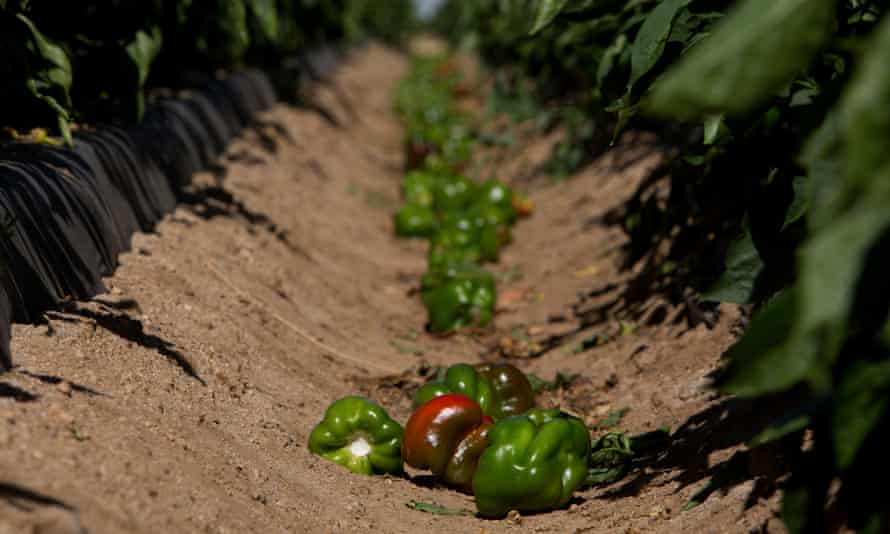
But Roger Gordon, who founded the Food Cowboy startup to rescue and re-route rejected produce, believes that the waste is built into the economics of food production. Fresh produce accounts for 15% of supermarket profits, he argued.
"If you and I reduced fresh produce waste by 50% like [the Usa agriculture secretary] Vilsack wants usa to do, then supermarkets would go from [a] 1.5% profit margin to 0.7%," he said. "And if we were to lose 50% of consumer waste, and then we would lose most $250bn in economical activeness that would go abroad."
Some supermarket bondage and manufacture groups in the U.s.a. are pioneering ugly produce sections and actively campaigning to reduce such losses. But a number of producers and distributors claimed that some retailing giants were still using their power to reject produce on the footing of some ideal of perfection, and sometimes because of market conditions.
The farmers and truckers interviewed said they had seen their produce rejected on flimsy grounds, but decided against challenging the ruling with the US department of agriculture's dispute machinery for fear of being boycotted by powerful supermarket giants. They likewise asked that their names non be used.
"I can tell you lot for a fact that I accept delivered products to supermarkets that was [sic] absolutely gorgeous and because their sales were slow, the last two days they didn't take my production and they sent it back to me," said the possessor of a mid-size eastward declension trucking visitor.
"They volition dig through l cases to detect one bad caput of lettuce and say: 'I am not taking your lettuce when that lettuce would pass a USDA inspection.' But equally the farmer told yous, there is zip you tin do, because if you utilise the Paca [Perishable Agronomical Commodities Act of 1930] on them, they are never going to buy from you again. Are you going to jeopardise $5m in sales over an $8,000 load?"
He said he experienced such rejections, known in the industry every bit kickbacks, "a couple of times a calendar month," which he considered on the low side for the industry. But he said he was normally able to sell the produce to another buyer.
The ability of the retail chains creates fear along the supply concatenation, from the family unit farmer to the major producer.
"These large growers do non want to piss off retailers. They don't enforce Paca on Safeway, Walmart or Costco," said Ron Clark, who spent more than twenty years working with farmers and food banks before co-founding Imperfect Produce.
"They are just non going to call considering that volition be the last order they will ever sell to them. That'south their fright. They are really in a pickle."
Source: https://www.theguardian.com/environment/2016/jul/13/us-food-waste-ugly-fruit-vegetables-perfect
0 Response to "what happen to unsold vegetables from farmers market in california"
Post a Comment